行与列
行(Rows)和列(Columns)无论在日常用语中,还是在电子表格、建筑等更专业的场景里,都是非常重要的概念。然而,学习者常常会混淆这两个词。理解它们之间的区别,能够提升沟通的清晰度,并确保在阅读和写作任务中获得更好的理解。
在本文中,我们将拆解行与列之间的区别,提供真实的例子,并深入说明它们在不同 CEFR 级别中是如何使用的。
什么是行(Row)?
行是指人、物体或信息沿水平方向并排排列的一种布局。它在日常生活中很常见——无论是座位安排、书架上的书籍,还是电子表格中的数据。
- CEFR 级别: A2
行通常在 A2(初级)级别引入,尤其是在描述空间布局这类场景中。
含“行”的例句:
- The students sat in a neat row during the ceremony. (A2)
- Books were aligned in a row on the shelf. (B1)
- The houses in the neighborhood are built in long rows. (B2)
什么是列(Column)?
列则是指物体、文字或信息沿垂直方向、一个叠一个堆叠起来的一种布局。这个词可以指建筑中的结构,也可以指电子表格中的元素。
- CEFR 级别: B1
学习者大约在 B1(中级)级别接触到“列”这个词,尤其是在数据组织和建筑这类场景中。
含“列”的例句:
- The plates were stacked into a tall column. (B1)
- The spreadsheet organizes the data in columns. (B2)
- Ancient Greek buildings often feature large, supporting columns. (C1)
“Rows(行)”的使用示例
A2 级别(初级)
- The students sat in a row for the class photo.
- 展示空间布局的简单句。
- There is a row of apples on the kitchen counter.
- 并排摆放的常见物品。
B1 级别(中级):
- The chairs in the theater were arranged in rows, facing the stage.
- 在更具体的场景(如座位安排)中描述“行”。
- Rows of vegetables were planted in the garden, separated by small paths.
- 描述自然中清晰、有序的布局。
B2 级别(中高级):
- The houses in this neighborhood are built in long rows along the street. facing the stage.
- 涉及城市或建筑规划的较复杂句子。
- In the Excel sheet, I added the sales data in the first row.
- 在电子表格使用场景中引入“行”。
C1 级别(高级):
- The students’ names were written in rows on the class roster to make it easier to read.
- 涉及更正式场景(如文档记录)的句子。
- The long rows of solar panels captured sunlight, contributing to the town’s renewable energy supply.
- 更抽象的用法,涉及技术与科学。
“Columns(列)”的使用示例
A2 级别(初级)
- The blocks were stacked into a tall column.
- 展示简单垂直布局的基础句。
- The newspaper had an article in the first column.
- 在媒体或阅读中的常见用法。
B1 级别(中级):
- In the Excel sheet, the data is organized in columns and rows.
- 引入电子表格术语。
- The ancient temple had large stone columns supporting the roof.
- 在建筑场景中描述“列”。
B2 级别(中高级):
- The periodic table is arranged in columns that group elements with similar properties.
- 在科学场景中引入这一概念。
- In the report, the survey results were organized into three columns for better readability.
- 商业或学术场景,强调数据组织。
C1 级别(高级):
- The towering columns of smoke rose into the sky after the volcano erupted
- 在高级语境中对该词更抽象、更具比喻性的用法。
- The spreadsheet’s error came from placing the data in the wrong columns, which affected the overall analysis.
- 涉及数据处理错误的复杂用法
行与列之间的关键区别
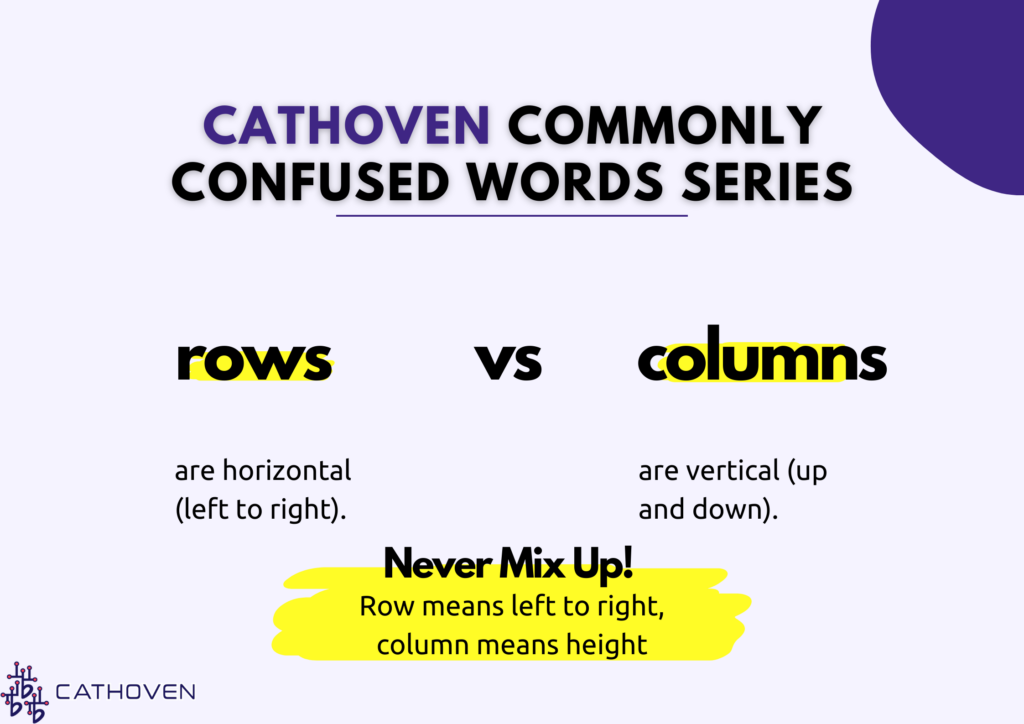
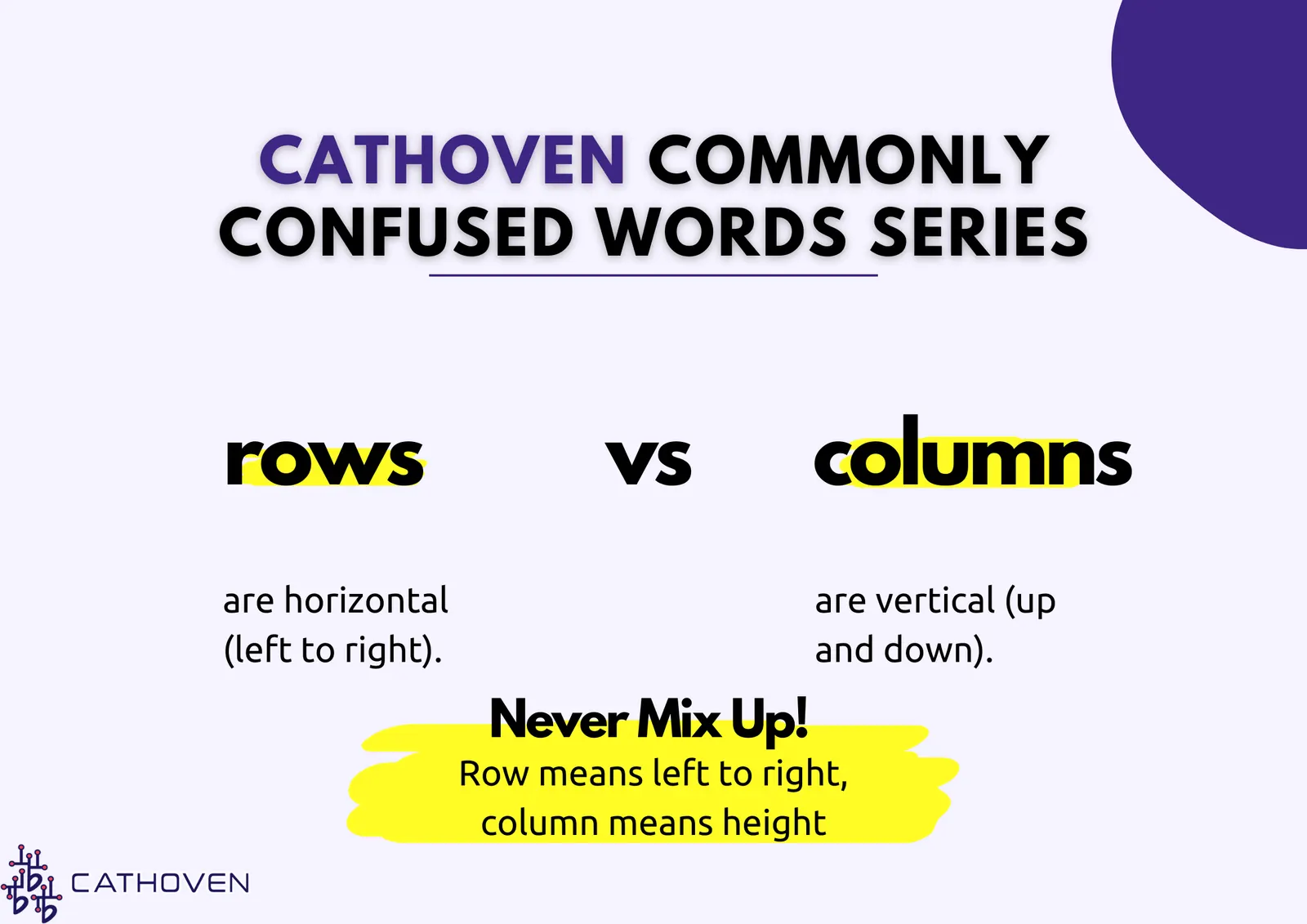
区分行与列最直接的方法在于它们的方向:
- 行(Rows) 是水平的(从左到右)。
- 列(Columns) 是垂直的(从上到下)。
一个简单的记忆方法就是这句押韵的话:“Row means left to right, column means height”(行是从左到右,列是高度方向)
实际应用
猫多芬的AI 驱动工具可以帮助教师和学习者通过真实场景练习重要概念。例如,练习生成器(Exercise Creator)让你只需提供一段文字,就能生成理解类练习题。为了让操作更简单,我们已经为你准备了一段示例文字——只需点击“使用示例文字”即可开始。文字就位后,你可以在几秒钟内创建选择题、判断题和简答题!
点击下方的“使用示例文字”,开始创建题目,检测学生对行与列的理解吧!
立即用你 自己的文字 试一试(简易版)
选择题
剩余次数:3
结果将显示在这里:
关于行与列的常见问题
行指的是水平方向、并排排列的物品,例如杂货店货架上排成一排的商品,或教室里摆放成排的课桌。
列描述的是垂直放置的事物,例如一摞硬币,或排成一条直线的东西,例如一柱烟。这个词也可以指建筑结构,例如古希腊建筑中常见的立柱。
在 Excel 或 Google Sheets 这类程序中,行是从左到右水平排列的方格(通常用数字编号),而列是从上到下垂直排列的方格(通常用字母标注)。